A battery enclosure can also be a structural installation. A cooling hose can cross a wiring route. A charging connector can belong to an aircraft whose supporting electrical supply is managed by a different organisation. These interfaces create maintenance questions that are easy to overlook when the planning discussion is limited to batteries and motors.
An interface-led review identifies what a task disturbs, what other systems depend on that area and which instructions control restoration. It is especially useful when a proposed capability combines airframe maintenance, specialist electrical work and ground-support services. The objective is a clear allocation of responsibility, not a new generic inspection standard.
Start with approved configuration
Before assessing a proposed component change, establish the aircraft's approved configuration and the status of the installed equipment. Physical fit is not sufficient evidence of compatibility. Part numbers, modification records, software dependencies and approved installation data may all affect whether a replacement is acceptable. A component sold for an electric aviation application is not automatically eligible for every aircraft.
Weight and balance considerations also remain aircraft-specific. Battery assemblies can represent a significant installed mass, but this website assigns no universal value or percentage. The relevant question is how the actual approved configuration and maintenance action affect the aircraft's records and limitations. Use the applicable instructions rather than assuming that a similar-looking pack is equivalent.
Consider structure and access together
Retention fittings, mounting surfaces, access doors and surrounding structure may experience loads or environmental conditions relevant to the energy installation. Removing an enclosure can expose adjacent systems or require additional restoration checks. A maintenance plan should therefore describe the complete task boundary, including access, protection of nearby equipment and the prescribed close-up actions.
Inspection findings need precise locations and descriptions. A broad entry such as “battery bay checked” does not explain which areas were accessible, which instruction was followed or what condition was observed. Where damage or deterioration falls outside published limits, the correct route is the applicable approved disposition process, not an improvised local acceptance criterion.
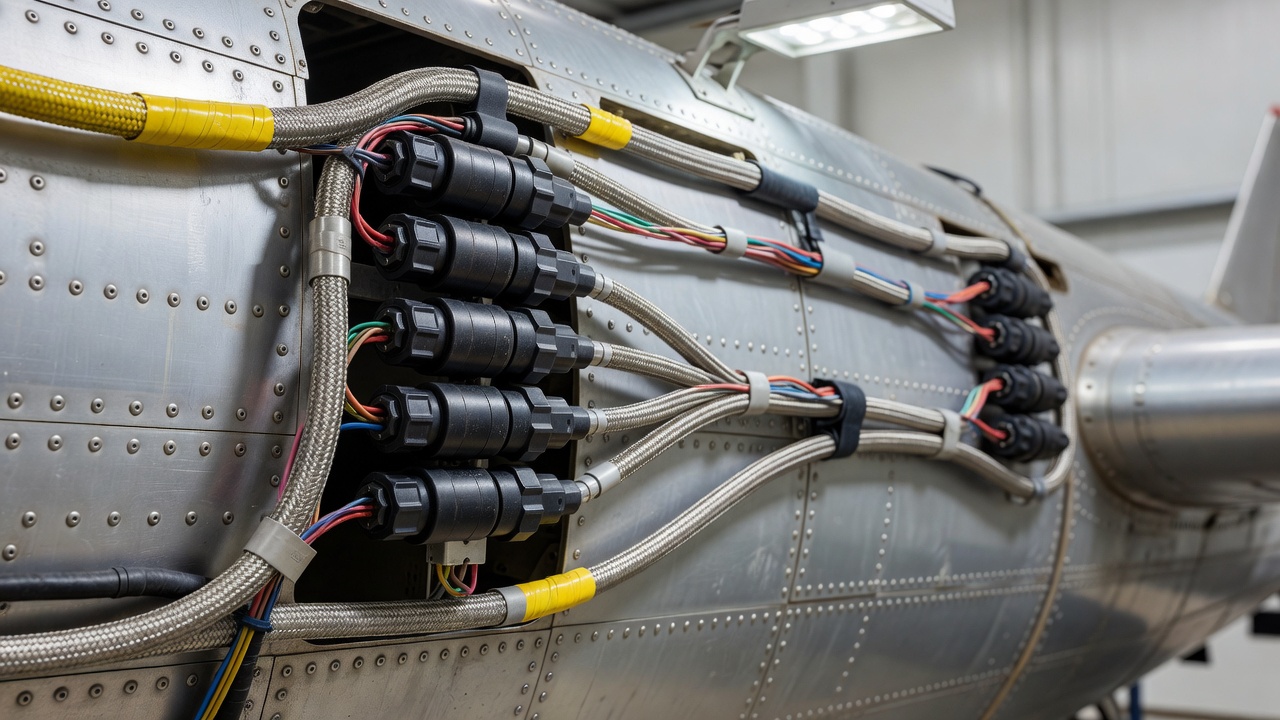
Follow wiring beyond the connector
Connectors are only part of an electrical installation. Harness support, separation, strain relief, abrasion protection, shielding and environmental protection can affect system integrity. Maintenance activity in one area can disturb another system's routing or support. General awareness helps planners recognise these dependencies, while the actual inspection and restoration criteria remain those in applicable aircraft data.
Bonding and grounding arrangements also require care in interpretation. Their purpose and verification method depend on the design. Do not apply a generic resistance target or an automotive practice to an aircraft installation without approved support. Test equipment suitability matters because some electrical tests can expose connected electronics to conditions for which they were not intended.
Build an interface matrix
A small matrix can make responsibility gaps visible before work starts. It should identify the physical boundary, the controlling data and the organisation responsible for the next action. The example below is a planning aid only. It is not an exhaustive hazard assessment and does not establish task applicability for any aircraft.
| Interface | Planning question | Evidence to identify |
|---|---|---|
| Pack / structure | What installation and close-up tasks apply? | Approved configuration and work references |
| Harness / enclosure | What routing or protection is disturbed? | Applicable inspection and restoration data |
| Cooling / airframe | Which adjacent systems share the route? | System diagrams and servicing instructions |
| Aircraft / charger | Where does each organisation's scope end? | Compatibility information and responsibility agreement |
Do not merge ground and aircraft approvals
A charging installation may involve building wiring, protective devices, equipment maintenance and local electrical safety obligations. These are not automatically brought within an aviation maintenance organisation's approval by being located beside an aircraft. Conversely, competence to service ground electrical equipment does not confer authority to work on the aircraft charging interface.
Plan the handover between the two environments. Who verifies charger compatibility? Who receives a fault report? Which records are retained with the aircraft, and which belong to the ground asset? The answers should be explicit enough to avoid a gap when an intermittent fault appears only during charging.
Use programme examples cautiously
The EASA-certified Pipistrel Velis Electro and its E-811 propulsion system provide concrete reference points for conventional aeroplane integration. EASA's CS-23 and CS-LSA publications describe different certification contexts; neither should be treated as a declaration that every electric aircraft falls within the same category. Aircraft configuration and certification basis must be checked individually.
NASA's X-57 Maxwell research programme is another useful architectural example, not an operational maintenance template. NASA announced the project's conclusion in June 2023 before a first flight. Research publications can explain integration challenges, but they do not establish civil type certification or approved maintenance tasks. Keep that distinction visible whenever emerging programmes appear in a planning presentation.
Source register
Reference frame: 2026. Historical programme examples do not imply current availability or approval.
- EASA certification specifications library: CS-23 and CS-LSA; confirm the applicable certification basis.
- EASA type-certificate library: aircraft and propulsion product identification.
- NASA: X-57 Maxwell project conclusion, June 2023.
- UK Civil Aviation Authority: jurisdiction-specific approval and airworthiness information.