Electric propulsion can remove familiar combustion-related tasks, but that does not make the remaining installation maintenance-free. Bearings, structural attachments, cooling equipment, electrical insulation and control systems still have defined operating environments and failure modes. The correct planning question is not simply how many moving parts have disappeared. It is which tasks the approved design and maintenance data require across the complete propulsion installation.
Architecture matters. A battery-electric aeroplane, a hybrid demonstrator and a distributed-propulsion aircraft may share some electrical principles while presenting substantially different maintenance boundaries. Establish the installation being discussed before carrying lessons from one programme into another work package.
Map the power path
At a conceptual level, energy passes from a source through switching and protection equipment to power electronics and a rotating electrical machine. The actual installation may divide those functions differently. Drawings, equipment identification and approved descriptions establish the real boundaries; a simplified block diagram is useful for orientation but insufficient for performing work.
The inverter or motor controller is not merely an accessory to the motor. Its switching behaviour, sensing and protection logic influence how the drive operates and how faults are recorded. A reported propulsion interruption could originate in a protective response, an upstream supply issue, a sensor problem or another condition. Replacing the component named most prominently on a display is not a substitute for approved fault isolation.
Keep the mechanical aircraft in view
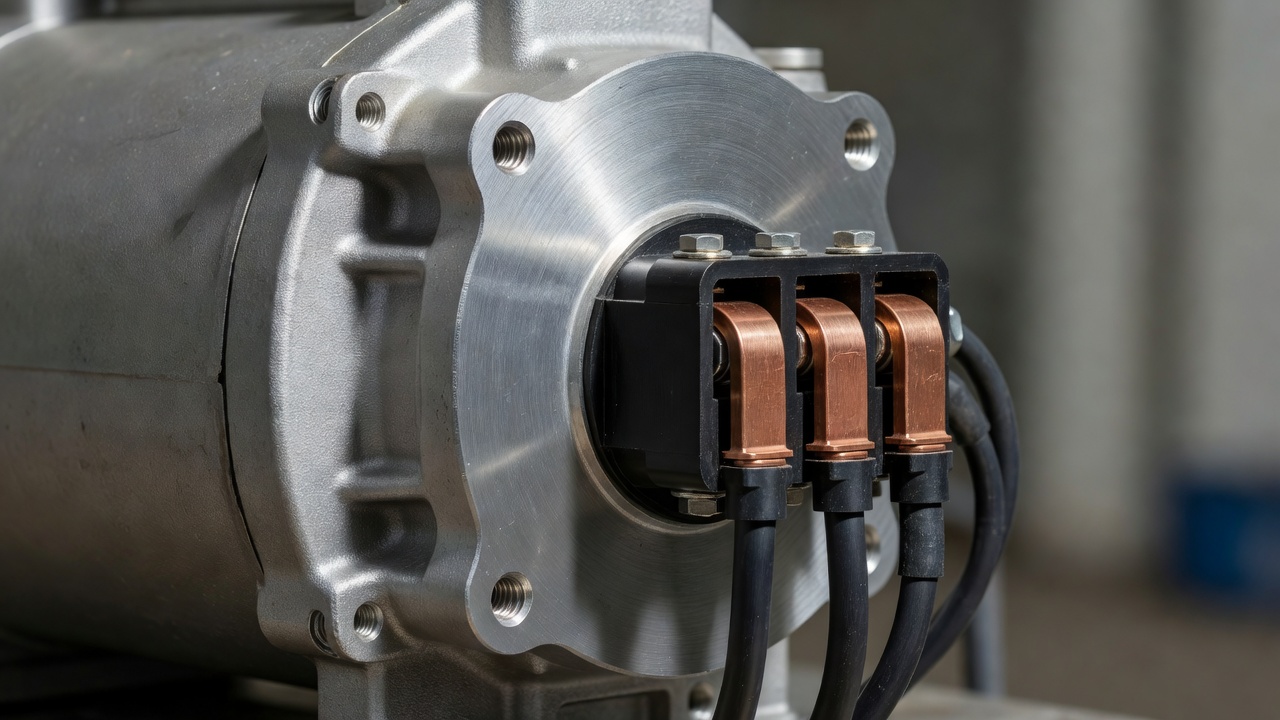
Rotating machinery still transfers loads through shafts, bearings, mounts and the propeller interface. Wear, alignment, vibration and foreign-object exposure do not disappear because torque is produced electrically. The approved maintenance programme determines how these concerns are inspected and assessed. Do not infer a service interval from a general claim about electric motor reliability.
Propeller work also retains its own requirements. Depending on the aircraft, limits and procedures may be spread across aircraft, propulsion and propeller documentation. A planner should ensure these sources form a coherent task package and that the personnel carrying out the work are authorised for the actual scope, not merely familiar with one component.
Treat cooling as a functional dependency
A thermal management system may serve the battery, power electronics, motor or several of these together. Cooling performance can therefore affect propulsion capability even when the electrical machine itself is undamaged. Fluid condition, leakage, pump operation, heat-exchanger contamination and airflow restrictions are examples of issues whose relevance depends on the installed design.
The lesson is not to apply a generic coolant check to every aircraft. It is to understand the manufacturer's defined thermal architecture and inspection requirements. Fluid specifications, servicing methods and acceptance criteria are manufacturer-specific. An apparently interchangeable product or familiar workshop method can introduce compatibility or contamination problems if used outside the approved instructions.
Preserve the diagnostic sequence
Fault history becomes more useful when it retains context. Record the aircraft identity, relevant component identifiers, software configuration, timestamps and reported operating circumstances. A screenshot without those associations may be difficult to interpret later. Preserve original exports where permitted, and distinguish recorded observations from the technician's interpretation.
Repeated resets or configuration changes can make a fault harder to reconstruct. Whether a reset is permitted, and what must be captured beforehand, is a question for the applicable instructions. A planning process should make room for evidence preservation rather than treating it as paperwork added after the physical work has finished.
Read certification references at the right level
EASA Special Condition E-19 addresses electric / hybrid propulsion systems within a certification framework. It helps explain why the propulsion system is considered as an integrated whole. It is not a maintenance checklist and does not supply a universal inspection programme. The EASA type-certificate library is the appropriate starting point for identifying the formal product record, including the Pipistrel E-811 where relevant.
SAE ARP4754A and ARP4761A are useful named references for development assurance and safety assessment context, respectively. RTCA DO-178C and DO-254 address software and airborne electronic hardware assurance. These documents explain aspects of engineering evidence; they do not authorise a maintainer to modify software, substitute hardware or release an aircraft.
Build capability around the actual task
Workshop readiness includes access to current technical data, suitable tools, controlled test equipment, diagnostic permissions and competent personnel. It may also require coordination with the aircraft or propulsion manufacturer. Do not assume an automotive diagnostic platform or general electrical test instrument is suitable merely because the installation uses an electric motor.
The useful output is a capability statement with boundaries: which aircraft configurations, which tasks, which facilities and which release arrangements are covered. This is more defensible than a broad claim that an organisation can service “electric aircraft.” Where information is missing, identify the gap and resolve it before scheduling the aircraft into a maintenance slot.
Source register
Reference frame: 2026. Verify the applicable revision and acceptance basis.
- EASA Special Condition E-19: electric / hybrid propulsion system framework.
- EASA type-certificate library: product records, including electric propulsion products.
- SAE standards catalogue: ARP4754A and ARP4761A; confirm the edition applicable to the programme.
- RTCA publication information: DO-178C and DO-254.